Duncan Wardrop
Associate Professor
Chemistry
Contact
Building & Room:
4446 SES, MC 111
Office Phone:
Email:
Related Sites:
About
Selectivity is the problem our group works on, and it appears in two forms. A synthetic route must form one bond among many that are chemically indistinguishable; a drug candidate must inhibit one enzyme among a dozen built from the same catalytic parts. We pursue both, and each half of the programme supplies the other with problems.
Body
Isoform-Selective HDAC Inhibitors
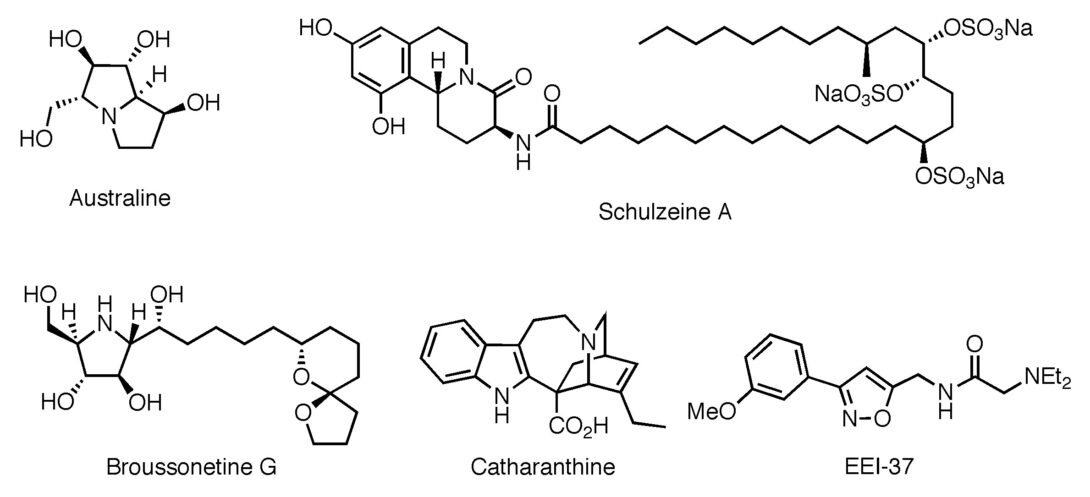
The histone deacetylases share a conserved zinc-dependent active site, so telling one isoform from another is a design problem rather than a screening problem. We build inhibitors of HDAC6, HDAC10 and HDAC11 by treating the three regions of the pharmacophore separately: the zinc-binding group, the linker that threads the enzyme channel, and the surface-binding cap. Much of our recent work concerns linker design, in particular the replacement of the conventional amide by a tetrazolone. The tetrazolone is conformationally restricted and electron deficient, and it retains the hydrogen bond to Ser531 that the amide carbonyl makes, so it buys metabolic stability without giving up a contact. Selective HDAC6 inhibition repolarizes tumor-associated macrophages from a protumoral to an antitumor phenotype and improves the response to immune checkpoint blockade. Our compound SM-06-09 inhibits HDAC6 at 0.49 nM with 690-fold selectivity over HDAC1 and enhances anti-PD-1 therapy in vivo. This work is carried out with Alejandro Villagra at the Georgetown Lombardi Comprehensive Cancer Center and Cyril Bařinka at the Institute of Biotechnology of the Czech Academy of Sciences, with support from the National Institutes of Health. We are now applying the same inhibitors to Charcot-Marie-Tooth disease in patient-derived iPSC models, with Xue-Jun Li at UIC.
Synthetic Methodology and Total Synthesis
The molecules above have to be made, and the second half of the programme develops the chemistry that makes them reachable. Our longest-running interest is in electron-deficient divalent intermediates, principally nitrenium ions and alkylidenecarbenes. Nitrenium ion cyclization of unsaturated O-alkyl hydroxamates, mediated by hypervalent iodine(III), forms carbon-nitrogen and carbon-oxygen bonds across an alkene in one operation, and we have used this oxamidation and the related azaspirocyclization-dienone cleavage sequence to reach lactacystin, dysibetaine, fasicularin, swainsonine, castanospermine and the schulzeines, whose reported structure we revised. Alkylidenecarbenes generated by dehydrative fragmentation of 5-hydroxyalkyl-1H-tetrazoles, a mild and base-free route we developed, insert into unactivated carbon-hydrogen bonds and give the tetrahydrofuran core of magnofargesin. These methods are suited to saturated nitrogen heterocycles and to bridged bicyclic amines, including the 2-azabicyclo[3.3.1]nonane that recurs in more than three hundred alkaloids across unrelated biogenetic families. Having assembled the diazatricyclic ABC ring system of madangamine D by this route, we are directing the chemistry at zamamiphidin A and himalensine A.
Antiviral Entry Inhibition
Viral entry offers a target that is structurally exposed and, for enveloped viruses, often shared across strains. Working with Michael Caffrey and Lijun Rong at UIC, we screened for small molecules that block the filoviral glycoprotein from delivering its cargo into human cells and identified a series of selective entry inhibitors, among the first reported for that step. Our influenza work targets the hemagglutinin stem of group 2 subtypes, where a bound ligand holds the neutral-pH conformation and prevents the structural change that entry requires. Beginning from tert-butylhydroquinone, we replaced the tert-butyl carbon with a trimethylsilyl group, reasoning that the larger covalent radius of silicon would improve contact within the pocket. The resulting organosilicons are both more potent and more durable than the parent compound: one shows roughly thirty times the activity of tert-butylhydroquinone against H3 and H7 pseudovirus, another no detectable oxidation across forty-eight hours where the parent has a half-life near twenty, and the series reaches a selectivity index of about two thousand. This work is reported with Caffrey and Balaji Manicassamy.
Training
Students in the group learn multistep synthesis and reaction development first, then take the compounds they have made into assays and into collaborations with immunologists, virologists and structural biologists. The intention is that a graduate leaves able to design a molecule, make it, and explain what it did.
Outreach and Undergraduate Research
Roughly thirty undergraduates have worked in the laboratory over the past decade, supported by the NSF Center for Authentic Science Practice in Education, NSF-SROP, the LAS Undergraduate Research Initiative and the UIC Honors College. We are a co-investigator on an NSF S-STEM award with Donald Wink and Avia Rosenhouse-Dantsker that funds scholarships, mentoring and career preparation for talented low-income students in chemistry and biochemistry, and have taught on the NSF Chicago Transformation Teacher Institute, which develops science leadership among Chicago Public Schools faculty.
Selected Publications
- Gajendran, N.; Suresh, M.; Marquez R., S. J.; Mohan, S.; Ponsot, T.; Quiceno-Torres, D.; Noboa, M. A.; Weselman, B. T.; Li, X.; Durr, M.; Novakova, Z.; Schutkowski, M.; Hepp, M.; Noonepalle, S.; Barinka, C.; Wardrop, D. J.*; Villagra, A.* “Macrophage-Centric Phenotypic Screening Identifies Tetrazolone-Based HDAC6 Inhibitors That Reprogram the Tumor Immune Microenvironment and Improve Immune Checkpoint Blockade.” J. Med. Chem. 2026, 69, 12870-12897. DOI: 10.1021/acs.jmedchem.5c02453. PMID: 42212676.
- Antanasijevic, A.; Haferman, N. J.; Shimon, A.; Tundup, S.; Anirudhan, V.; Rong, L.; Manicassamy, B.; Wardrop, D.; Caffrey, M.* “Inhibition of Influenza Entry by Organosilicon Compounds.” J. Med. Virol.2025, 97, e70436. DOI: 10.1002/jmv.70436. PMCID: PMC12150666.
- Noonepalle, S. K. R.; Gracia-Hernandez, M.; Aghdam, N.; Berrigan, M.; Coulibaly, H.; Li, X.; Zevallos-Delgado, C.; Pletcher, A.; Weselman, B.; Palmer, E.; Knox, T.; Sotomayor, E.; Chiappinelli, K. B.; Wardrop, D.; Horvath, A.; Shook, B. A.; Lee, N.; Dritschilo, A.; Fernandes, R.; Musunuri, K.; Shibata, M.; Villagra, A.* “Cell Therapy Using Ex Vivo Reprogrammed Macrophages Enhances Antitumor Immune Responses in Melanoma.” J. Exp. Clin. Cancer Res. 2024, 43, 263. DOI: 10.1186/s13046-024-03182-w.
- Alexakos, P. D.; Wardrop, D. J.* “N-Morpholinomethyl-5-lithiotetrazole: A Reagent for the One-Pot Synthesis of 5-(1-Hydroxyalkyl)tetrazoles.” J. Org. Chem. 2019, 84, 12430-12436. DOI: 10.1021/acs.joc.9b01885.
- Bhattacharjee, A.; Gerasimov, M. V.; DeJong, S.; Wardrop, D. J.* “Oxamidation of Unsaturated O-Alkyl Hydroxamates: Synthesis of the Madangamine Diazatricyclic (ABC Rings) Skeleton.” Org. Lett. 2017, 19, 6570-6573.
- Yermolina, M. V.; Wang, J.; Caffrey, M.; Rong, L. L.; Wardrop, D. J.* “Discovery, Synthesis and Biological Evaluation of a Novel Group of Selective Inhibitors of Filoviral Entry.” J. Med. Chem. 2011, 54, 765-781.
- Bowen, E. G.; Wardrop, D. J.* “Nitrenium Ion-Mediated Alkene Bis-Cyclofunctionalization: Total Synthesis of (-)-Swainsonine.” Org. Lett. 2011, 13, 2376-2379.
- Wardrop, D. J.*; Bowen, E. G.; Forslund, R. E.; Sussman, A. D.; Weerasekera, S. L. “Intramolecular Oxamidation of Unsaturated O-Alkyl Hydroxamates: A Remarkably Versatile Entry to Hydroxy Lactams.”J. Am. Chem. Soc. 2010, 132, 1188. (Featured Cover Article, 3 February 2010.)
Education
B.Sc. (Hons., 1st Class), Chemistry, University of Glasgow, 1991
Ph.D., Organic Chemistry, University of Glasgow, 1995 (Ernest Colvin)
Postdoctoral Research Fellow, Oregon State University, 1995-1997 (John D. White)